Your team is online too much. Here’s what to do about it.
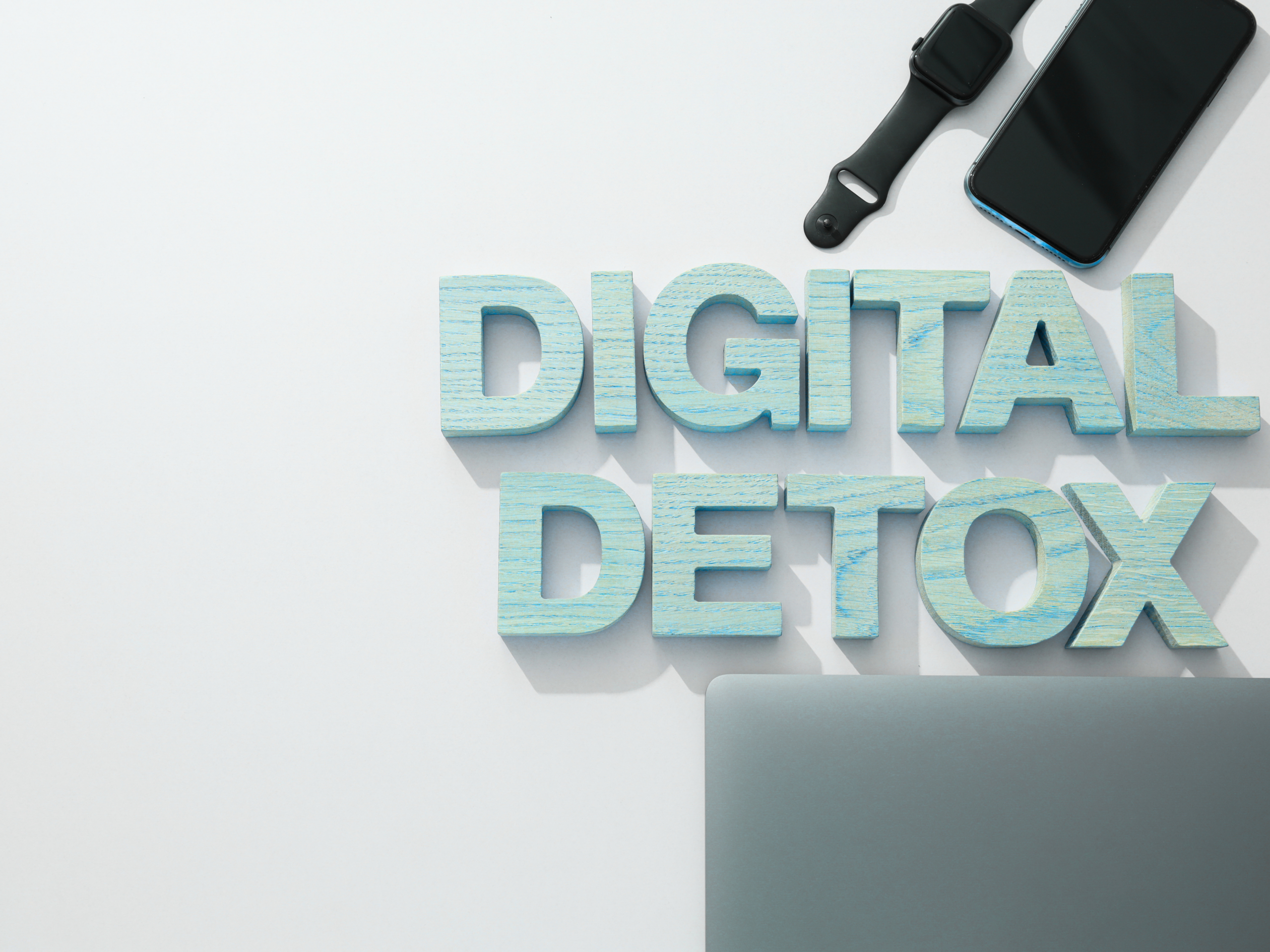
Digital detox used to conjure images of a retreat where you hand your phone in at reception and spend the weekend relearning how to breathe. Now it is a workplace strategy. For health and wellness brands in particular, that shift is super important.
There is a quiet irony in the wellness industry right now. The brands telling consumers to slow down, breathe, and step away from their screens are often run by teams who are chronically, exhaustingly online.
Social media does not stop at 5pm. Algorithms reward consistency. Clients have questions on Sundays. The result is a working culture that never fully switches off, and a team that burns through its best thinking before lunch.
A digital detox at work is about building habits that protect the thing your brand sells: human wellbeing. And for wellness brands, there is a strategic case to go with the ethical one.
| Your audience is primed to notice when a brand’s actions do not match its values. That coherence shows up in the quality of the work.
Why it is harder than it looks
Every notification is a small interrupt. Over time, that constant low-level stimulation keeps the brain in a state of mild alert, which makes it harder to think clearly, write well, or produce anything authentically original. Research published in Psychoneuroendocrinology found that checking a phone within five minutes of waking produced 31% higher cortisol levels 90 minutes later, alongside increased self-reported anxiety, compared to those who waited at least an hour.
The same pattern plays out across the working day. A 2025 randomised controlled trial published in BMC Medicine found that reducing smartphone screen time significantly improved stress, depressive symptoms, and sleep quality compared to a control group. The gains held at follow-up.
For a team whose job is creating content, that matters enormously. Stressed, fatigued writers produce predictable, forgettable copy. Creative thinking requires a brain that has had time to recover.
What the research says about team-level change
One of the more consistent findings in the literature is that individual disconnection policies are less effective than collective ones. A 2024 scoping review published in Sustainability (Hopkins, 2024) examined right-to-disconnect research across 15 countries and found that work-life balance, health, and wellbeing were the most significant outcomes when teams or organisations adopted shared boundaries around connectivity, rather than leaving it to individuals to manage on their own.
France introduced right-to-disconnect legislation in 2017. Australia followed in 2024. The policy rationale in both cases was the same: constant connectivity creates cognitive and emotional overload, which carries measurable costs to health and productivity.
The evidence does not suggest switching everything off. It suggests being intentional about when and how the team is expected to be online.
What actually works
Protect mornings as a team
A protected morning window, say 9am to 10am with no Slack, no email, no social feeds, gives the team space to do their most considered work before the day fragments. The key is doing it collectively. One person’s phone-free hour carries much less weight if the rest of the team is active and the inbox is filling up while they are offline.
Set communication windows, then hold to them
Constant availability does not make a team more responsive. It makes them more anxious and less effective. Setting clear windows for messages and communicating those to clients is a professionalism signal. Clients who respect your expertise will respect your hours.
Build screen breaks into the schedule
Microbreak research consistently shows that short breaks away from screens reduce mental fatigue and restore focus. Even a five-minute break has a measurable impact on concentration. Build recovery time into the working day the same way meetings go in the calendar.
Audit your tools
Before asking your team to disconnect, look at what you are asking them to stay connected to. Multiple platforms, inboxes, and project management tools create a cognitive load that no amount of goodwill and coffee will fix. Consolidate where you can. Every unnecessary tool removed is a decision the team no longer has to make.
Model it from the top
If the founder or head of content sends messages at 10pm, the team will feel the pull to respond. Leadership behaviour sets the culture. When senior people visibly disconnect, the rest of the team gets permission to do the same.
The content angle
Wellness brands have a genuine opportunity to build this into their content strategy, as thought leadership, rather than navel-gazing. Audiences are increasingly sceptical of brands that preach wellbeing while visibly burning their teams out. Behind-the-scenes content that shows how your team actually works, the boundaries you keep, the tools you have cut, the rhythms you have built, is far more compelling than another round-up of wellness tips.
That kind of content builds trust over time. For health and wellness brands, trust is the whole game.
Where to start
Pick one thing. A whole detox strategy built on good intentions tends to grind to a halt. One concrete change, agreed on as a team, is more valuable than a policy document no one comes back to.
A protected morning window is a good starting point. So is agreeing that internal messages stop after a set time on one day per week. Small, consistent habits compound. The goal is to make your team’s relationship with technology intentional, so the work they produce reflects that.
Your audience has already worked that out. It might be time the team did, too.
Dot Dash Digital works with health and wellness brands to build content strategy that is valuable to your audience. If your current approach feels like a treadmill, we should talk.
Sources
- Cohorty (2025). Phone-free morning habit: The first hour rule, citing 2024 Psychoneuroendocrinology data. https://www.cohorty.app/blog/phone-free-morning-habit-the-first-hour-rule-science-backed-2025
- Pieh, C. et al. (2025). Smartphone screen time reduction improves mental health: a randomised controlled trial. BMC Medicine, 23, 107. https://link.springer.com/article/10.1186/s12916-025-03944-z
- Hopkins, J. (2024). Managing the right to disconnect – a scoping review. Sustainability, 16(12), Article 4970. MDPI. https://doi.org/10.3390/su16124970
- Josserand, E. & Boersma, M. (2024). Australia’s right to disconnect from work: Beyond rhetoric and towards implementation. SAGE Journals. https://journals.sagepub.com/doi/10.1177/00221856241290625
- Focused Solutions (2025). The science and wellness benefits of microbreaks. https://focused-solutions.com/2025/06/24/the-science-and-wellness-benefits-of-microbreaks/